Introduction
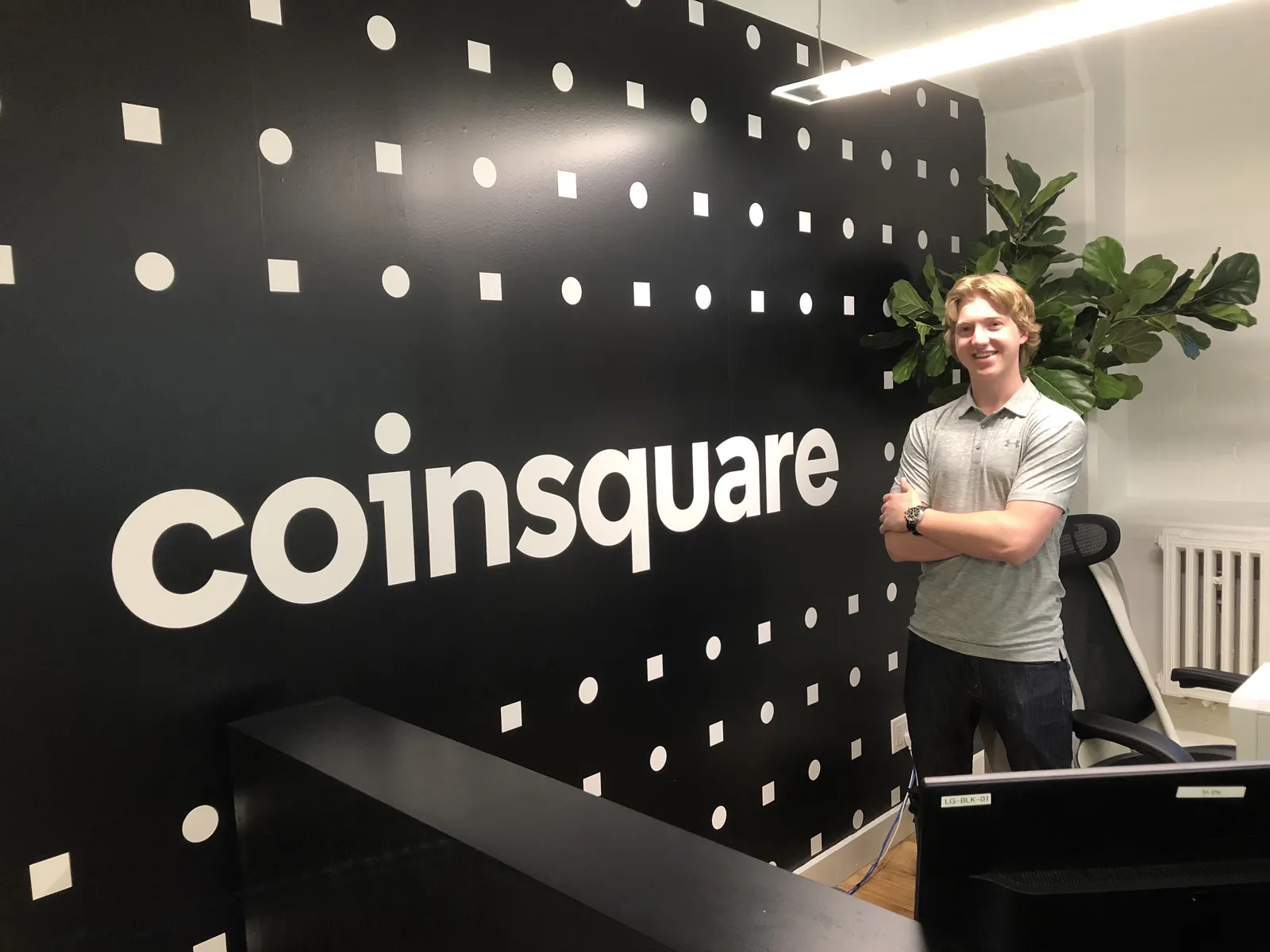
Welcome to my first work term report! This has been my very first work term placement, and it has been an absolutely amazing experience. Throughout this report I will talk about the company I had my placement with, some goals I set for myself, and what the overall experience was like. I hope you enjoy, and for any other information feel free to contact me!
Employer Information
I was lucky enough to secure my first 8 month co-op placement at a Toronto based company called Coinsquare. Coinsquare is aiming to be a 21st century financial institution by managing, trading, and marketing crypto assets. In other words, they are a cryptocurrency trading platform! This was super cool as I am interested in cryptocurrencies and blockchain technology, so this was a perfect fit. The company was started in 2014 by Virgil Rostand who is now CTO after joining forces with Cole Diamond (CEO). Coinsquare prides itself on being the most trusted Canadian cryptocurrency exchange through support, security, and service as they have never lost a coin and are a financially recognized and registered MSB. This is really reflected in the company values, and it was cool to see people prideful and caring about their work. I was a web developer on the Solutions/Engineering team, so I was able to interact and work with people from all over the company, which was an awesome experience. At the time of writing Coinsquare is about 140 employees strong, and I felt honoured to be one of them!
Goals
Before beginning this placement I had created two sets of goals for myself. The first set of goals were for the first term, and the second set was for the second term. I crafted these goals with no prior knowledge of what exactly I would be doing, or how the development process flowed, but I was motivated and committed to learn, grow and work my hardest to meet these goals! The first set of goals I set for myself were:
- Become familiar with advanced JavaScript (ES6, asynchronous actions and functional programming)
- Research React, Redux and Coinsquare's codebase. Familiarize myself with conventions, best practices and gitflow
- Write, Commit, Push and Merge my first piece of code into Coinsquare's codebase
After some late nights and support from my team, I can pridefully say that I managed to accomplish all three of these goals within the first two months of my placement. I chose these goals specifically because I knew they would directly benefit me in my day to day work as a developer, and they would help me hit the ground running at full force the quicker I managed to complete them. The skills that these goals reflect are also super in demand and useful to have even after this placement. Learning JavaScript and React were some web development skills that I really wanted to learn, and practicing them directly in a real world scenario were imperative to my success. The first two goals were accomplished with the help of multiple resources including Udemy courses that were offered to me, side project development (including this website!), and the always open for questions mentality my co-workers had. The third goal was then completed shortly after the first two, as I saw the previous goals as prerequisites. Once I was confident in my abilities, I was given a few small tasks to complete and eventually got to contribute to the product that it is today!
After completing my first set of goals, I was gaining confidence, and looking to take on more challenging work. I wanted to establish and lay out my next milestones in order to start working on them as soon as possible. With that mentality and motivation, I crafted my second set of goals:
- Be a fully functioning team member (Take on real feature work, become self sufficient, and take accountability)
- Explore Backend Work (Ask to participate in backend tasks, and start to explore the platform repositories)
- Contribute to the Development Process (Find something that I can either create or improve in the development lifecycle at Coinsquare)
The first item on the list would eventually come with more time and experience. As I progressed as a developer, I was given more in-depth and challenging work that really helped me to learn and grow in my role. Just before the halfway mark of my placement I was really beginning to feel like a full time employee that was doing full time employee work. I was doing real work, that also came with real responsibility! This was great as it gave me a glimpse of what software development looked like in the industry, and I was participating in everything.
Also right around the halfway point of my placement, I was eager to learn more so I inquired about possibly taking on some backend work. I wanted to round out my web development skills and become more "Full Stack". I started researching our backend code, and the technologies we used (Node, Express, MySQL, Postgres, Knex) and with the permission of my leads, I was able to start tackling some backend tickets. This was not only amazing experience, but it also resolved some blockers I would have when developing on the frontend. I no longer needed to wait on or ping the platform team for something we needed, I could go and do it myself!
Lastly, the final goal was something I was constantly observing to see if there was anything I could improve. Turns out, this was something simpler than I had imagined. Through the use of Atlassian's Confluence, I was able to craft and share documentation on a few pain points we had throughout the development/onboarding process. I realized the need for good documentation when I was going through setting up my backend environment. The process was constantly changing, and I always had to keep bugging a more senior backend developer for help configuring my environment. Once I was all set up, I refined some of the backend documentation that was already there for setting up an environment, and also created new pages on setting up your backend environment from a frontend developer's perspective. As this was the case for me, I created the docs in hope they would be useful for other new frontend developers later down the line!
Looking back on the goals I set for myself, I feel like they were appropriate and challenged me in various ways. I believe setting personal goals and striving to meet them not only helps in personal success, but makes whatever it is you are doing more worthwhile!
Job Description
For this placement at Coinsquare, I joined the team as a "Student Web Developer". When I joined the team in May 2018, we had an engineering structure that consisted of different teams. Some of these teams were the blockchain team, platform team (backend), advanced trade team, and the web team (my team!). On the web team, we were tasked with contributing, maintaining and developing our web application. We spent most of the time either developing features that would deliver business value, or optimizations and bug fixes that would better the user's experience. I personally got to work on a wide range of tasks while I was at Coinsquare, and they ranged from small things like CSS styling tweaks to full on features (new components, functionality and logic). The range of available tasks grew with my time and exposure to our product.
One thing that is interesting/unique to my job that I enjoyed is that I was always working on or learning something new. This can probably be generalized to most programming jobs, but with the fast and hectic nature that is the crypto world, I think it especially applies here. I think this is also amplified by the use of JavaScript. There are so many libraries and packages available that make development better, you really need to build and expand your knowledge on a lot of different extensions. I would also say that just working in and around cryptocurrency and blockchain technology is one of the most unique and interesting traits of this job on its own!
Some of the skills I needed for this job were the web development basics (HTML/CSS), advanced JavaScript knowledge, some widely used JavaScript libraries (ReactJS, NodeJS), gitflow, and general computer science terms and methodologies! Guelph CS actually had prepared me fairly well for this job (mainly CIS*2750) as it not only introduced JavaScript, but taught me some very useful gitflow and workflow strategies that I used in my everyday work. Software design classes had also prepared me for agile and scrum team environments, so I understood our practices and methodologies almost right off the bat! Some skills that I learned while on the job were developing clean code using React/Node, network architecture, how to actually code review, release cycles, design systems and product/project management tools. Overall I have come a long way from where I started, and it is really cool to reflect on what I have learned. In the extras section I will include my learning timeline/notes list that I kept throughout my placement.
ReactJS, Redux, NodeJS, Webpack:
Academic Relation
Relating this job back to my degree and studies, I feel both positively impact each other and enhance my learning greatly. There were some experiences and concepts I had learned before this placement that positively affected my work experience, and the same can be said the other way around. I will take so much out of this work term not only into my degree, but throughout my software engineering career. This was probably one of the best first placements I could have possibly started at, and I will never forget that. I would also say that learning in a real world environment as opposed to a contained classroom is such a great new experience, and is where the real value of a co-op placement lies. School will teach you the fundamentals and how to learn, but internships/placements will show you how to put those skills to use. This placement has enhanced my academic experience in too many ways to record, and I cannot recommend enough the importance of getting some other experience during your degree. Whether that be internships, co-op placements, freelancing or side projects, it all exposes new learning opportunities you would not normally experience in school.
Featured Aspect
One aspect of this work term that I would really like to focus on and talk a little bit more about is the use of blockchain technology, and what it can accomplish. Even though I was not a blockchain developer, I still learned a lot about cryptocurrency and the use of blockchain tech through the nature of the company. This is something I would like to consider pursuing in a future work term, or later in my career, as I believe this technology has huge potential and the ability to change the world.
A blockchain is basically a distributed or decentralized database or spreadsheet. Blockchains can be used for almost any application you would want, but there is some criteria that you might look for when deciding when to use a blockchain. You would want to use a blockchain if you:
- Avoid needing to trust a single or central party
- Want to decentralize a system to maximize uptime
- Want an open API
- Want low or no fixed costs
- Need transparent processes (everything is visible and open)
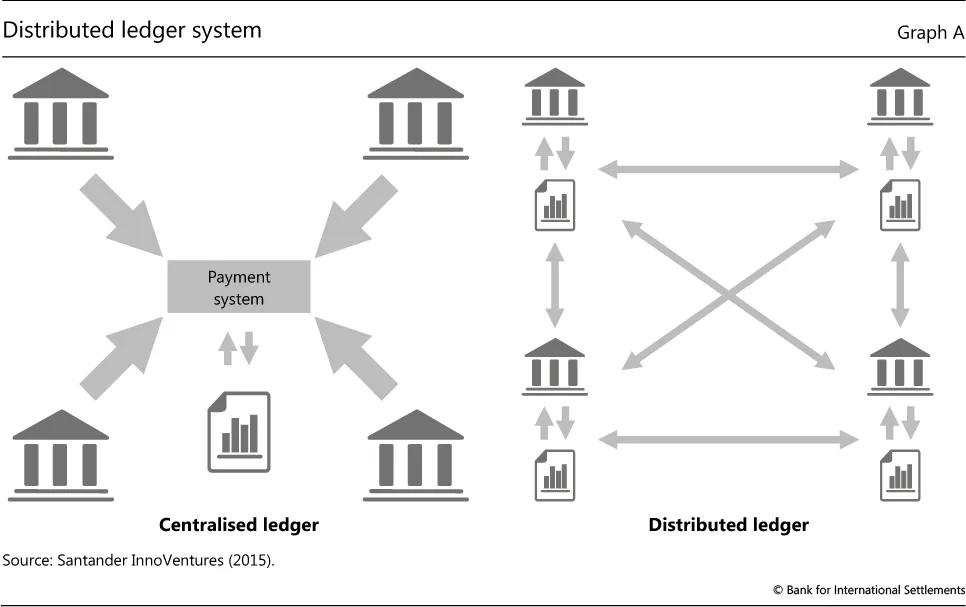
When people think of blockchain tech, they usually think of cryptocurrency. While this technology was pioneered from Satoshi's Bitcoin, there have been multiple iterations (Ethereum and ERC20 tokens) and advancements (smart contracts/DApps) that make this a viable and emerging solution. Blockchains have ultimately solved the "double spending" problem in a decentralized way, that does not depend on one single party. Let's investigate a real world example, and then see how a distributed ledger could improve on the current process. Let's say we have company A and company B. Both companies do business with each other, other companies, and have lots of transactions coming in and out. Right now they both keep their own separate ledgers that contain all of their transactions, and depend on a central party (say a bank) to process and track their transactions. This bank also keeps their own ledger that both companies trust to populate their own. Although it usually does not happen, this current process allows for malicious actions from the central party (incorrect transaction processing, wrong amounts, withholdings) as well as the other two companies having out of date ledgers until the single party confirms everything! With a distributed ledger, everyone shares a single database. The source of truth. Transactions are real time and confirmed on the basis that they actually are legit and correct, thanks to the nodes on the ledger that validate each transaction. Overall, using some form of distribution or decentralization creates a sense of security and transparency as each transaction on the ledger is 100% valid. All transactions are visible on the ledger, but it's up to how the ledger was implemented to determine how much information is visible. Generally most are configured in a way that allows visibility of a transaction confirmed from anonymous person A to anonymous person B, but no identifiable information.
Here is a good basic visual of what a distributed ledger looks like:
Conclusion
This has been an absolutely amazing experience, and I could not have picked a better company to work at, or better people to work with for my very first placement. Just looking back at notes from when I first started made me reflect on how much I had actually grown. I have learned and experienced more in these short 8 months than I could have ever imagined. I owe a lot to my team, and the people who have mentored me through this placement. Even though my main role was as a web developer, I have experienced and advanced in so many more ways than just that. Working in an agile environment, participating in extracurricular events, and growing as both a person and developer has been something I will never forget. The skills I have learned, and the people I have met at Coinsquare to kick start my career in this field has been amazing. I have a couple shout outs to give, as I would never have been able to succeed in this job without them. Shawn/Phong for always being open to questions and for teaching me some super valuable stuff, Mo for being an awesome director and for giving me a chance, Jawwad for being an awesome PM, Mike for interviewing me and last but not least Jay for being my dude.
Extras
Here are just some extra things I took out of my placement that I would like to share, and did not really fit into any of the other categories.
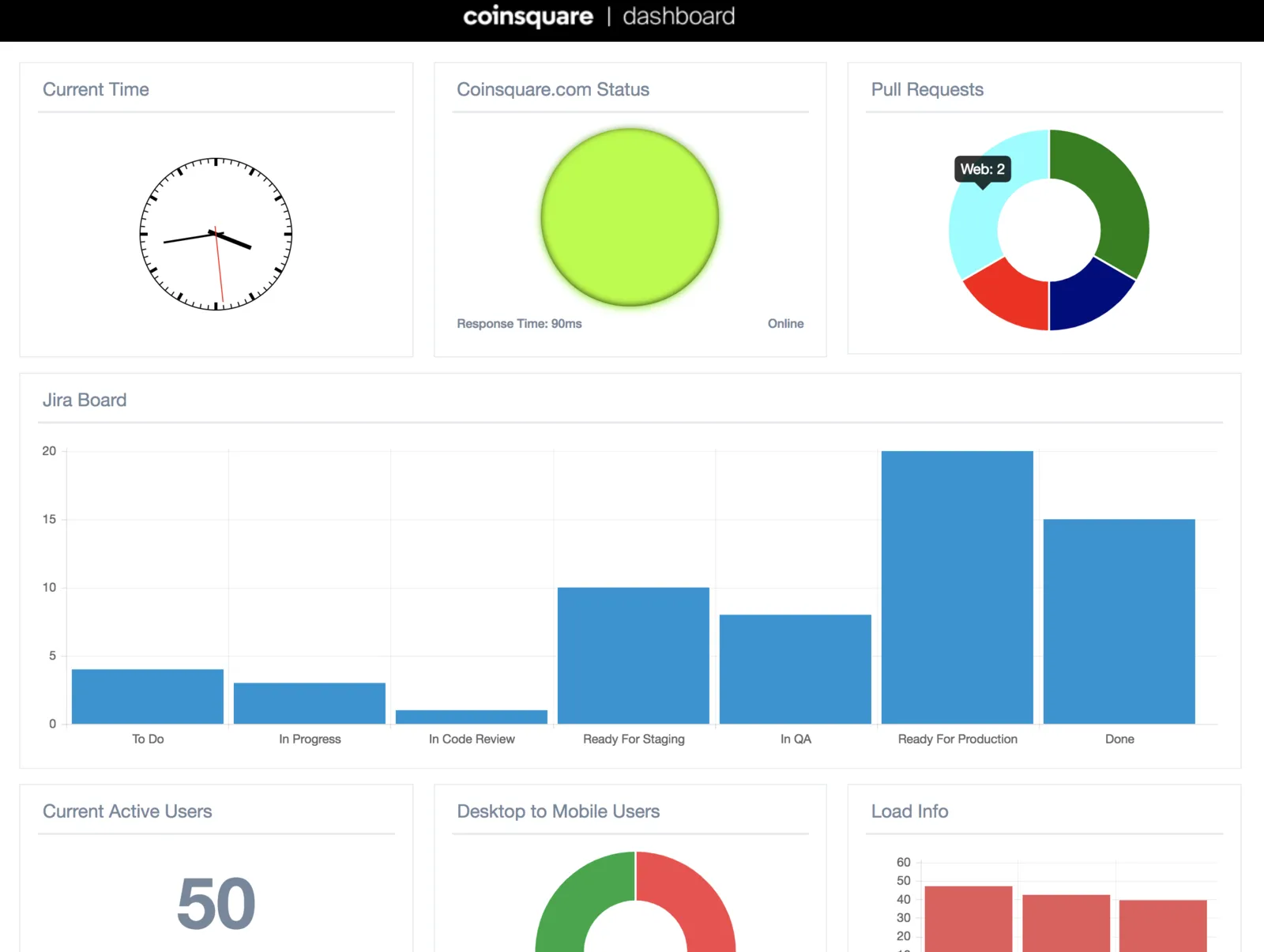
- One very cool thing that I got to do at Coinsquare was participate in our very inaugural internal hackathon. This functioned as a normal hackathon and we had half the day to come up with something innovative to present to the business. My idea that I worked on with one other teammate was the Coinsquare dashboard. An all in one single page application to constantly provide feedback to a specific team. This dashboard is meant to display meta and valuable information to team members on a screen somewhere in the workplace. In the example prototype we came up with, we had things like website status, site latency, number of pull requests and breakdown by team pulled from GitHub's API, number and breakdown of Jira tickets from Atlassian's API and number of active users. If you want to check out a live demo, you can here!
The Coinsquare Dashboard:
- I also wrote an article on my time at Coinsquare from the halfway mark of my placement. The article talks about my time there from a more casual and personal level. If you want to check that out, click here!